





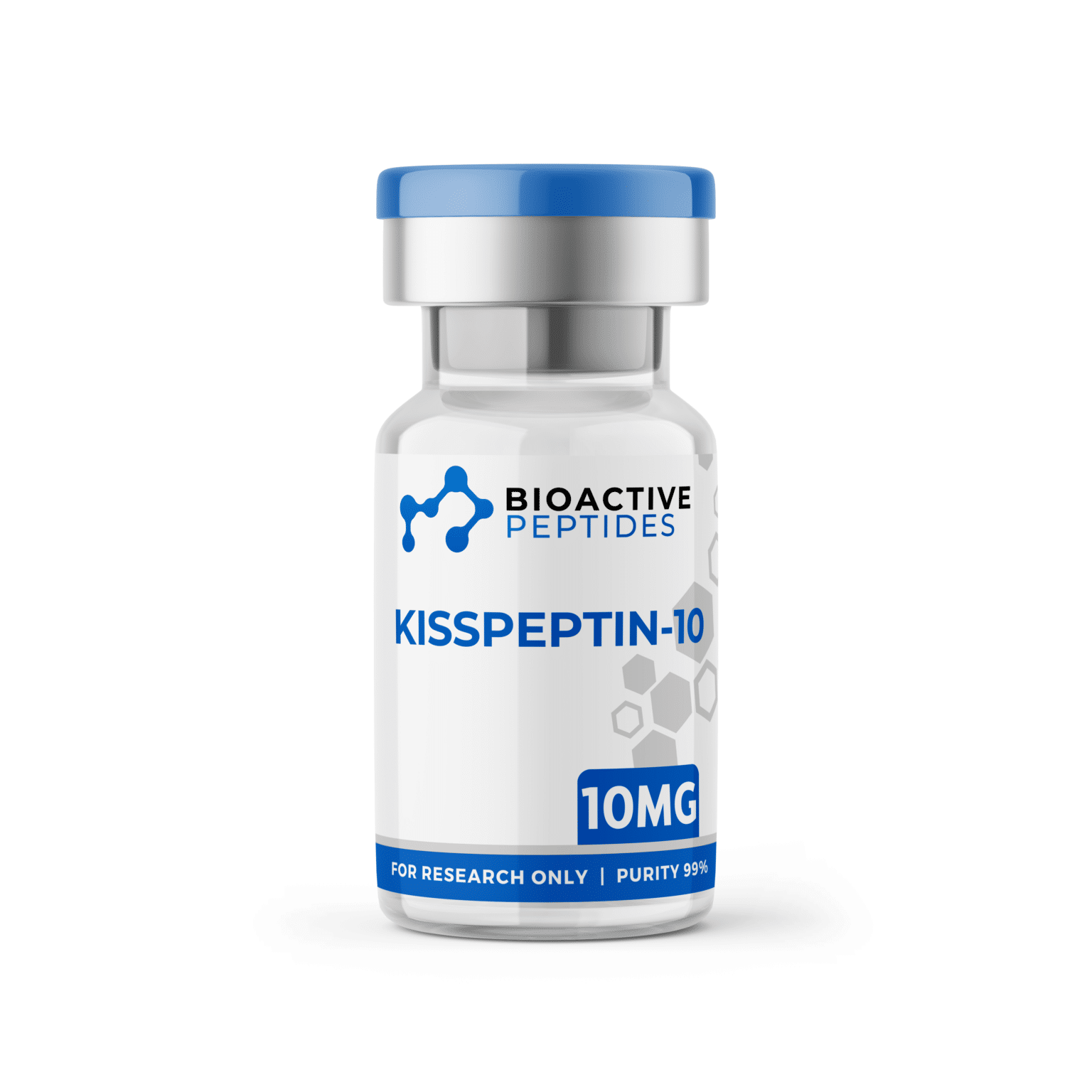
Kisspeptin-10 – 10mg
Overview
Kisspeptin-10 is a synthetic peptide fragment derived from the larger kisspeptin protein family, which plays a central role in regulating reproductive hormone signaling pathways. In research environments, it is widely studied for its interaction with the hypothalamic-pituitary-gonadal (HPG) axis and its influence on gonadotropin-releasing hormone (GnRH) activity.
This 10mg formulation is intended for controlled laboratory research applications only, offering high purity and consistency for endocrine and neuroendocrine studies.
What is Kisspeptin-10?
Kisspeptin-10 is a short-chain peptide fragment of the Kiss1 protein, which binds to the KISS1 receptor (GPR54). This interaction is a key regulator in reproductive hormone signaling pathways.
In laboratory research, Kisspeptin-10 is primarily studied for its role in:
- GnRH (gonadotropin-releasing hormone) activation
- Regulation of reproductive hormone cascades
- Puberty onset signaling pathways (in model studies)
- Hypothalamic-pituitary-gonadal (HPG) axis research
- Neuroendocrine communication mechanisms
Key Research Applications
Reproductive Hormone Signaling Research
Kisspeptin-10 is widely used to study the upstream regulation of reproductive hormones, particularly its influence on GnRH release.
HPG Axis Studies
Researchers investigate how Kisspeptin signaling interacts with the hypothalamus, pituitary gland, and gonadal function in controlled models.
Endocrine System Research
It is used in studies exploring hormone regulation, feedback loops, and reproductive endocrine balance.
Neuroendocrine Pathway Analysis
Kisspeptin-10 is also used in neuroscience-related endocrine studies examining how the brain regulates hormonal signaling.
Product Specifications
- Compound: Kisspeptin-10
- Strength: 10mg per vial
- Form: Lyophilized (freeze-dried) powder
- Purity: Research-grade (typically ≥99%)
- Storage: Refrigerate after reconstitution (2–8°C standard lab conditions)
Handling & Storage Guidelines
To ensure peptide stability in research settings:
- Store unopened vials in a cool, dry environment
- Protect from heat, moisture, and direct light
- Reconstitute using sterile laboratory procedures
- Follow standard peptide handling protocols



Reviews
There are no reviews yet.