





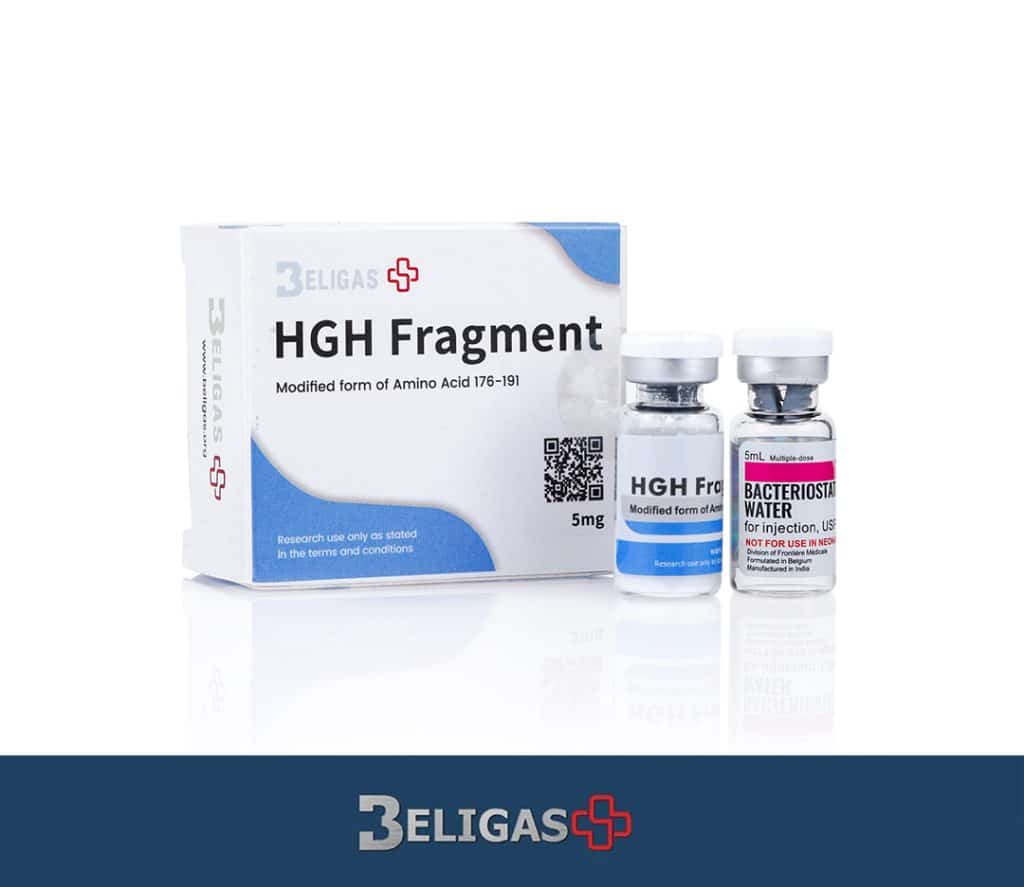
Beligas HGH Fragment – 5mg
Overview
Beligas HGH Fragment (commonly referred to as HGH Fragment 176-191) is a synthetic peptide derived from a modified segment of the human growth hormone molecule. It is primarily used in scientific research focused on metabolic function, cellular signaling, and lipid metabolism pathways.
This 5mg formulation is designed for controlled laboratory research requiring precise peptide concentration and high purity standards.
What is HGH Fragment (176-191)?
HGH Fragment 176-191 is a modified peptide sequence derived from the C-terminal region of human growth hormone. Unlike full-length growth hormone, this fragment is studied independently in research settings to isolate specific metabolic pathways.
In laboratory studies, it is commonly investigated for its role in:
- Lipid metabolism signaling pathways
- Adipocyte (fat cell) activity in models
- Energy balance regulation mechanisms
- Growth hormone fragment receptor interactions
- Metabolic research applications
Key Research Applications
Metabolic Pathway Studies
Researchers examine HGH Fragment 176-191 for its potential role in lipid metabolism and energy regulation pathways in controlled experimental models.
Lipolysis Research Models
It is frequently used in studies analyzing fat cell breakdown mechanisms and metabolic signaling behavior.
Growth Hormone Fragment Research
Scientists use this peptide to isolate and study specific biological effects associated with the C-terminal region of growth hormone.
Cellular Signaling Studies
HGH Fragment is included in experiments exploring receptor binding and intracellular signaling responses in metabolic systems.
Product Specifications
- Brand: Beligas
- Compound: HGH Fragment 176-191
- Strength: 5mg per vial
- Form: Lyophilized (freeze-dried) powder
- Purity: Research-grade (typically ≥99%)
- Storage: Refrigerate after reconstitution (2–8°C standard laboratory conditions)
Handling & Storage Guidelines
For optimal stability in research environments:
- Store sealed vials in a cool, dry place
- Avoid exposure to heat, light, and moisture
- Reconstitute using sterile laboratory techniques
- Follow standard peptide handling protocols




Reviews
There are no reviews yet.